HomeAbout UsCapabilityPlatformTrainingContact Usblog
Why Virtual Autopsy Is Becoming an Essential Part of Modern Forensic Investigations
VIRTUAL AUTOPSY12 JUNE 20262 MIN READ

Why Virtual Autopsy Is Becoming an Essential Part of Modern Forensic Investigations

Summary

Virtual Autopsy is changing how forensic teams examine, document, and preserve post-mortem findings. From detailed imaging to reviewable digital evidence, it is adding a powerful new layer to modern forensic investigations while complementing established forensic practice.

Why Is Virtual Autopsy Becoming More Relevant to Forensic Investigations?

Forensic investigations have always depended on careful observation, scientific judgement and evidence that can withstand scrutiny. What is changing is how much information can now be captured before an invasive examination even begins. Virtual Autopsy, using technologies such as post-mortem CT (PMCT), MRI and 3D reconstruction, allows forensic teams to examine and digitally document the body in considerable detail.

In this article, we look at where this approach adds real investigative value, the virtual autopsy benefits institutions are beginning to recognise, its limitations, and why its growing role could be particularly relevant to the future of virtual autopsy in India.
What Does Virtual Autopsy Add That Forensic Teams Did Not Have Before?

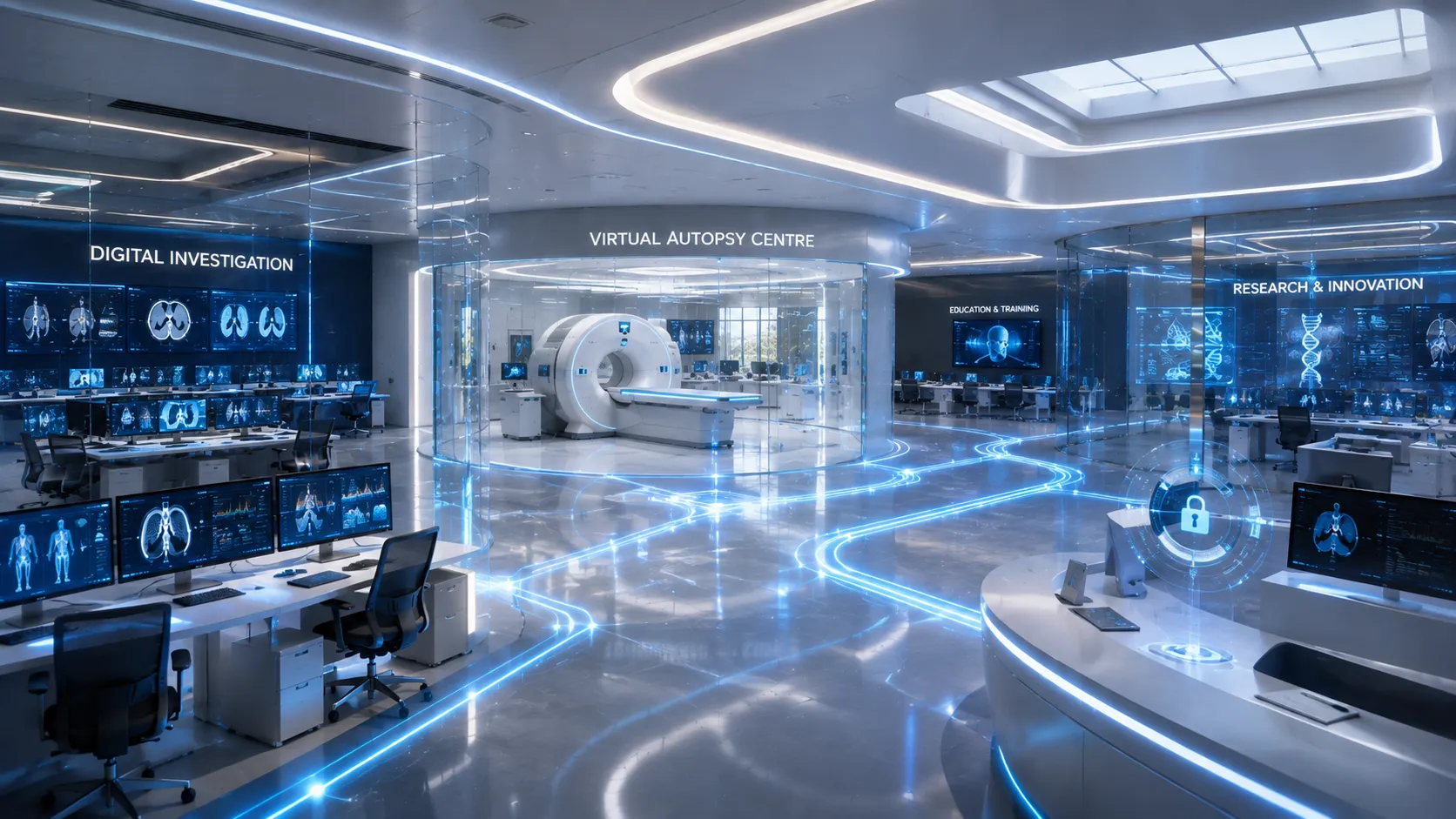
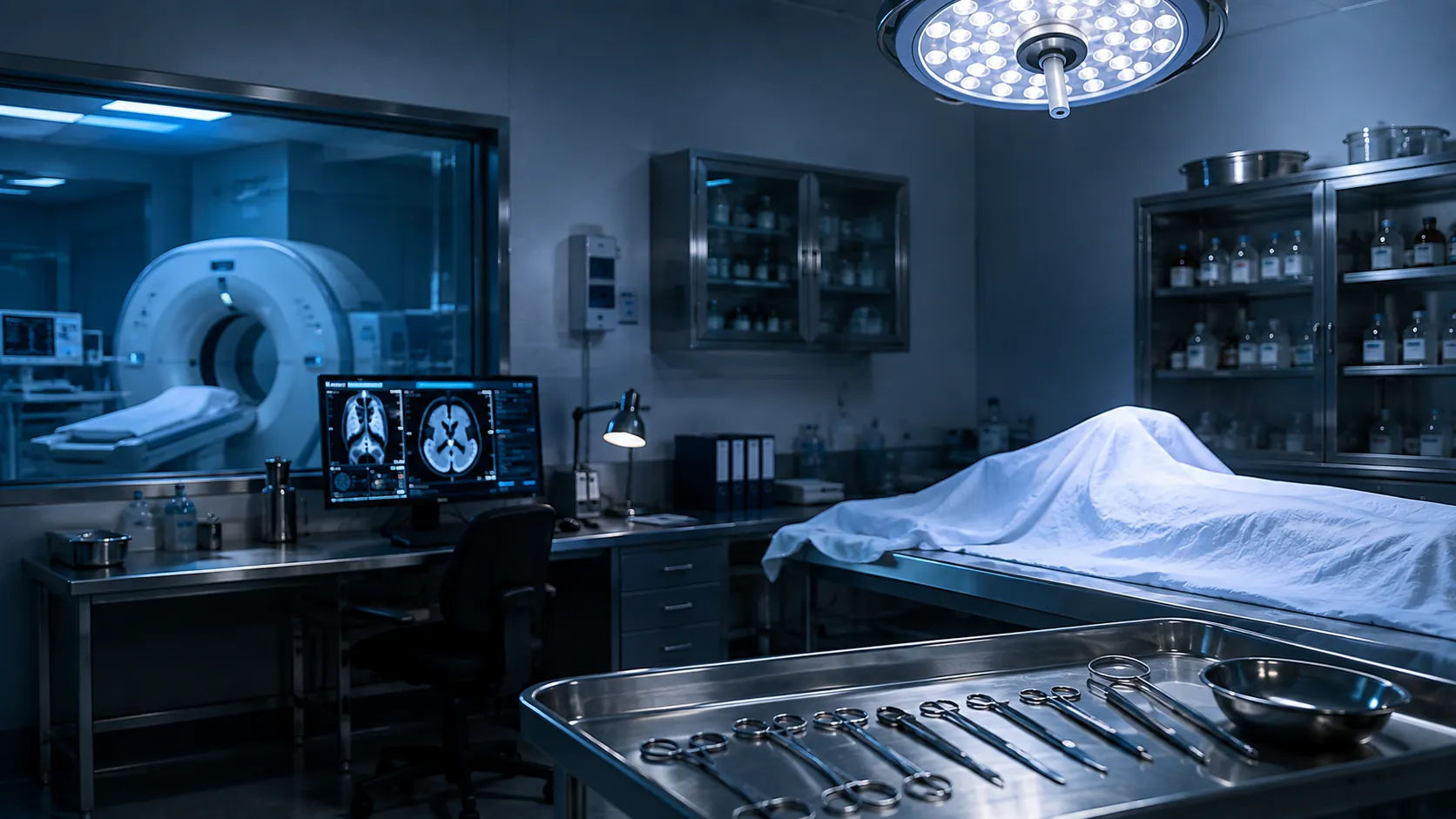
One of the most useful ways to understand Virtual Autopsy is to think beyond the scan itself. A conventional autopsy produces findings documented through notes, photographs, samples, and the final report. Post-mortem imaging adds something different: a digital anatomical record captured at a particular point in the investigation. That record can be revisited.

You can view a fracture from another angle. A foreign object can be located before dissection. A second expert can review the images without the body being physically present. Three-dimensional reconstructions can also make complex anatomical findings easier to demonstrate.

AIIMS New Delhi describes forensic radiology as useful for identifying fractures that may not be visible to the naked eye and for providing two-dimensional and three-dimensional documentation to support medicolegal investigations.

This ability to preserve what was seen creates an important shift in forensic practice. The examination no longer has to be understood only through what was observed at the time. Investigators can revisit parts of it later.

Where Are the Practical Benefits of Virtual Autopsy Most Visible?

From our observations of how forensic imaging is evolving, several applications stand out.

1. Trauma Can Be Viewed More Completely

PMCT is particularly useful in examining skeletal trauma, fractures, gas collections, foreign bodies and certain internal findings. A systematic review comparing PMCT with conventional autopsy found particular advantages in detecting fractures, gas in internal organs, major haemorrhages and bullet fragments, although its performance varied depending on the type of finding.

A more recent 2026 systematic review similarly found meaningful practical value in Virtual Autopsy, particularly through its non-invasive nature and ability to digitally document findings.

For road traffic fatalities, falls and other complex trauma cases, this can give forensic experts an anatomical overview before further examination begins.

RELATED READING

Interested in how CT is changing post-mortem examination?

Explore our related article, How CT Imaging Is Transforming Death Investigations Worldwide.

EXPLORE MORE
CT in Post-Mortem

2. Digital Evidence Can Be Reviewed Again

Perhaps one of the most important virtual autopsy benefits is not what happens during the examination, but what becomes possible afterward. Imaging data can become part of the case's digital evidence record. Subject to appropriate storage, governance and chain-of-custody procedures, it can support:

  • subsequent expert review;
  • multidisciplinary discussion;
  • comparison with other evidence;
  • teaching and research;
  • clearer visual explanation of complex findings.

This matters because forensic questions do not always end when the initial examination does. New evidence may emerge, another specialist may be consulted, or findings may need to be explained months or years later. That makes preservation part of the investigation, rather than simply an administrative step after it.

RELATED READING

From Crime Scene to Courtroom: The Journey of Digital Forensic Evidence

Explores why how evidence is captured, preserved, and accessed matters throughout its lifecycle.

EXPLORE MORE
Digital Evidence Journey

3. It Can Support More Respectful Examination Pathways

India presents another important context. Religious, cultural and family concerns surrounding invasive autopsy can sometimes make an already difficult situation more sensitive. Virtual Autopsy offers a non-invasive method of examination and, where medically and legally appropriate, may help forensic teams obtain useful information while limiting dissection.

AIIMS itself identifies Virtual Autopsy as a possible alternative in certain circumstances where relatives oppose dissection, as well as a complementary method for better visualisation of post-mortem findings. This does not remove the scientific requirements of a medicolegal investigation. It does, however, create more possibilities for balancing investigation, evidence and dignity.

Does Virtual Autopsy Replace Conventional Autopsy?

This is where the conversation needs some restraint.

Current evidence does not support treating Virtual Autopsy as a universal replacement for conventional autopsy. The 2026 systematic review noted limitations including tissue sampling, soft-tissue assessment, and differentiating some ante-mortem and post-mortem changes.

The more useful question, therefore, is not which method wins. It is, which combination of methods gives the forensic expert the strongest evidence for this particular case?

Depending on the circumstances, that may mean imaging alone, conventional autopsy, targeted sampling, toxicology, histopathology, or a combination of approaches. This is also why the forensic expert must remain central. Technology expands what we can see, preserve, and review. Interpretation still requires forensic expertise and case context.

Explore the distinction in more detail

Virtual Autopsy vs Conventional Autopsy: Understanding Their Complementary Roles.

EXPLORE NOW

Why Could Virtual Autopsy in India Become Increasingly Important?

India's opportunity goes beyond installing more scanners. AIIMS has already established forensic radiology capabilities and developed an SOP for Virtual Autopsy, along with training covering PMCT, post-mortem changes, and practical applications in forensic cases. For wider adoption, institutions will need to think about the complete forensic workflow:

  1. Imaging infrastructure: access to appropriate post-mortem imaging.
  2. Forensic expertise: professionals trained to interpret findings in post-mortem context.
  3. Digital preservation: secure storage and retrieval of imaging and associated evidence.
  4. Standardised workflows: clear protocols connecting imaging with pathology, investigation and reporting.
  5. Education: practical exposure for current and future forensic professionals.
  6. Collaboration: closer interaction between forensic medicine, radiology, law enforcement and other specialists.

This leads to an important observation from our work in this space. A scanner can produce images; a forensic ecosystem turns those images into useful evidence. That distinction will matter as Virtual Autopsy moves from individual centres of excellence towards broader institutional adoption.

What Does Virtual Autopsy Mean During Mass-Casualty Investigations?

Its relevance becomes even clearer when forensic teams have to work at scale. INTERPOL's 2023 Disaster Victim Identification guidance recommends whole-body post-mortem imaging and notes that CT can help determine cause and manner of death, locate implants, and record identifying features that can be compared with ante-mortem information. During a mass disaster, digital imaging can therefore support both investigation and identification while creating records multiple specialists can examine.

From Imaging Technology to a Forensic Ecosystem

At SEVA Technologies, we believe the next stage of forensic modernisation will depend less on any single piece of equipment and more on how imaging, digital workflows, education and forensic expertise work together. That philosophy shapes our approach to Virtual Autopsy. The aim is to help institutions build capabilities that support investigation today while also creating infrastructure for education, research and continued learning. The technology will continue to evolve. Building the knowledge and systems around it is equally important.

Virtual Autopsy Is Expanding the Forensic Toolkit

Virtual Autopsy is becoming an essential part of modern forensic investigations because it gives experts another way to see, document, preserve and revisit evidence. For virtual autopsy in India, the opportunity is particularly significant as institutions consider how forensic infrastructure can become more digital, collaborative and future-ready. Its greatest value may ultimately come from something quite simple: giving forensic experts more evidence to work with, while preserving dignity and scientific rigour.

Exploring how Virtual Autopsy could fit into your institution's forensic infrastructure?

Talk to SEVA Technologies about building an integrated, future-ready forensic ecosystem.

TALK WITH US

FAQs

Virtual Autopsy is a post-mortem examination approach that uses medical imaging technologies such as CT and MRI to examine and document the body. The resulting images can reveal fractures, foreign bodies, gas collections, and other findings, while 3D reconstruction helps experts examine anatomical relationships and preserve a digital record for later review.

Important virtual autopsy benefits include non-invasive examination, detailed documentation of skeletal trauma, digital preservation of findings, and the ability to review imaging after the initial examination. It can also support multidisciplinary consultation, education and research. Its usefulness varies by case, which is why forensic interpretation and complementary investigative methods remain important.

Not in every case. Current research shows that Virtual Autopsy has particular strengths in areas such as skeletal trauma and digital documentation, while conventional autopsy remains important for tissue examination, histopathology, and findings that imaging may not adequately demonstrate. In practice, the two approaches can complement rather than compete with each other.

Yes. Forensic radiology and Virtual Autopsy capabilities are developing in India. AIIMS New Delhi has established forensic radiology infrastructure, developed an SOP for Virtual Autopsy, and conducted training in PMCT and related applications. Wider adoption will depend on infrastructure, trained professionals, protocols and integration with existing medicolegal systems.

Post-mortem CT provides detailed cross-sectional images and is particularly valuable for examining skeletal injuries, foreign bodies, gas distribution and certain internal findings. It can also generate data for three-dimensional reconstruction. Forensic specialists can review the digital examination later, allowing them to return to specific findings when new investigative questions arise.

Post-mortem imaging can document anatomical features, locate medical implants and provide information that can be compared with ante-mortem records. INTERPOL's DVI guidance recognises whole-body imaging as an important component of post-mortem examination in disaster investigations, alongside established identification methods such as fingerprints, dental examination and DNA. The resulting records also allow remote multidisciplinary specialists to contribute without physical handling of remains.