The Journey of Digital Evidence in Forensic Investigation from Crime Scene to Courtroom
Summary
Digital evidence can remain relevant long after a forensic examination is complete. Its journey from imaging and documentation to expert review and the courtroom depends on how carefully it is captured, preserved, interpreted and made accessible.
What Happens to Evidence After It Is First Documented?
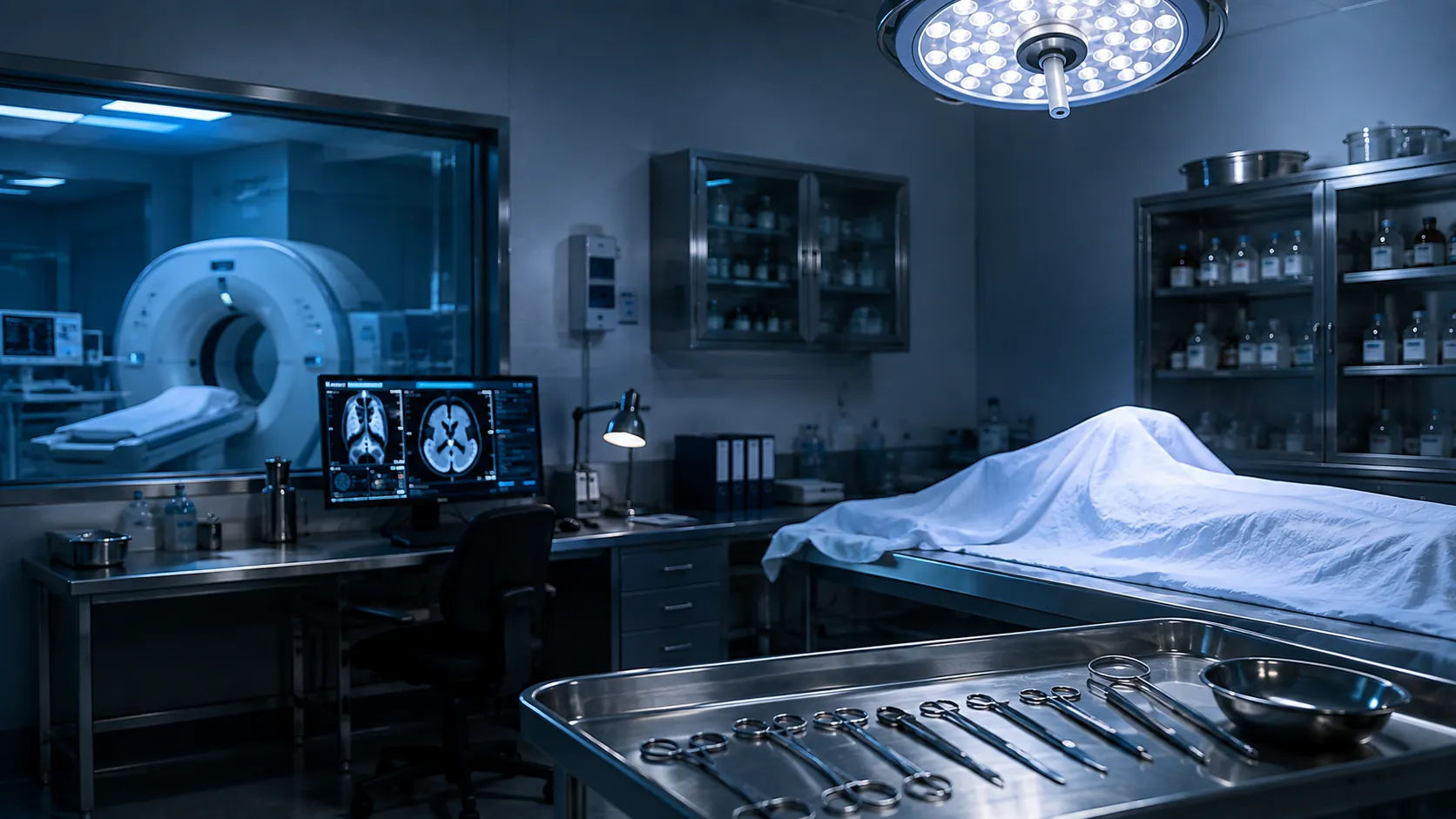
A forensic investigation may begin at a crime scene, in a mortuary or inside an imaging facility. But the evidence generated there can travel much further. A CT scan may initially help a forensic expert examine an injury. Months later, the same images could be revisited when a new question emerges, reviewed by another specialist or used to explain findings during legal proceedings.
That longer journey is making digital evidence in forensic investigation increasingly important. And it raises a question that deserves as much attention as the technology used to create the evidence: What happens to the digital record after it's captured? The answer takes us from imaging and preservation to chain of custody, expert interpretation and, ultimately, the courtroom.
A Digital Record Can Outlive the Examination That Created It
Forensic evidence has always depended on careful documentation. Digital technologies are expanding what that documentation can contain. Photography, post-mortem CT, MRI and 3D reconstruction can create detailed records of findings at a particular point in an investigation. Unlike an observation recorded only in a report, forensic imaging evidence can potentially be returned to and examined again.
Growing evidence shows the value imaging can add. A large multicentre study involving 500 post-mortem examinations across nine centres compared conventional autopsy with post-mortem CT and CT angiography. Across 18,654 recorded findings, autopsy identified 61.3%, post-mortem CT 76%, and post-mortem CT angiography 89.9%. The researchers also found that the strongest results came when imaging and autopsy were used together.
Capturing Evidence Is Only Half the Job
A detailed scan may be created in minutes. Its evidentiary life could extend for years. For that to happen, the institution needs to be able to answer some fairly basic questions later:
Which case does this dataset belong to?
When and how was it created?
Has the original record been preserved?
Who has accessed or reviewed it?
Were copies or subsequent versions created?
Can the evidence still be retrieved in its original form?
These questions show why forensic evidence preservation deserves attention alongside imaging technology. The National Institute of Standards and Technology (NIST) notes that digital evidence presents preservation challenges beyond those associated with traditional evidence. Digital files may need protection not only from deliberate alteration but also from accidental modification, corruption, technological obsolescence and loss of contextual information.
The Image Matters. So Does Its History.
This brings us to chain of custody. With physical evidence, the principle is familiar: establish where the evidence came from, document who handled it and preserve its integrity as it moves through an investigation. Digital evidence follows the same underlying principle, but introduces additional questions.
Was the original file retained?
Was a working copy created?
Has anything changed since acquisition?
Who accessed the record?
Can that history be demonstrated later?
Guidance from the National Institute of Justice on preservation and chain of custody stresses the importance of documenting evidence from collection through transfer, storage and presentation so that its identity and integrity can be established. In a digital forensic environment, that suggests a useful operating principle: Preserve the evidence together with its history.
See How CT Imaging Is Transforming Death Investigations Worldwide for a closer look at the growing role of post-mortem CT in forensic practice.
EXPLORE MORE
What If Someone Needs to Look at the Evidence Again?
This is where digital imaging changes what's possible in forensic practice. Imagine an investigation in which a post-mortem CT was performed at the beginning of the case. Several months later, investigators raise a new question about a fracture pattern. Or another specialist is asked for an opinion. If the original imaging dataset has been preserved appropriately, the expert may be able to return to it rather than depend entirely on selected photographs or the wording of the original report.
Research continues to demonstrate where that capability can be particularly useful. A 2026 meta-analysis covering 22 studies and 1,757 fracture cases reported pooled sensitivity of 87% and specificity of 97% for post-mortem CT in fracture detection. The authors concluded that PMCT can provide valuable adjunctive support to traditional autopsy.
When Evidence Reaches Court, Clarity Matters as Much as Detail
A courtroom does not need more data simply because technology can produce it. It needs relevant evidence that can be understood and explained. A CT dataset may contain hundreds or thousands of images. The forensic expert's role is to determine which findings matter, interpret them in the context of the case and communicate their significance accurately.
Digital visualisation can help. An injury pattern, anatomical relationship or foreign object may be easier to demonstrate visually than through words alone. But the technology does not make the conclusion. The forensic expert does. This is why the journey from crime scene to courtroom cannot be reduced to better scanners or larger digital archives. It requires imaging, evidence management, and professional interpretation to work together.
The Real Opportunity Is to Connect the Evidence Journey
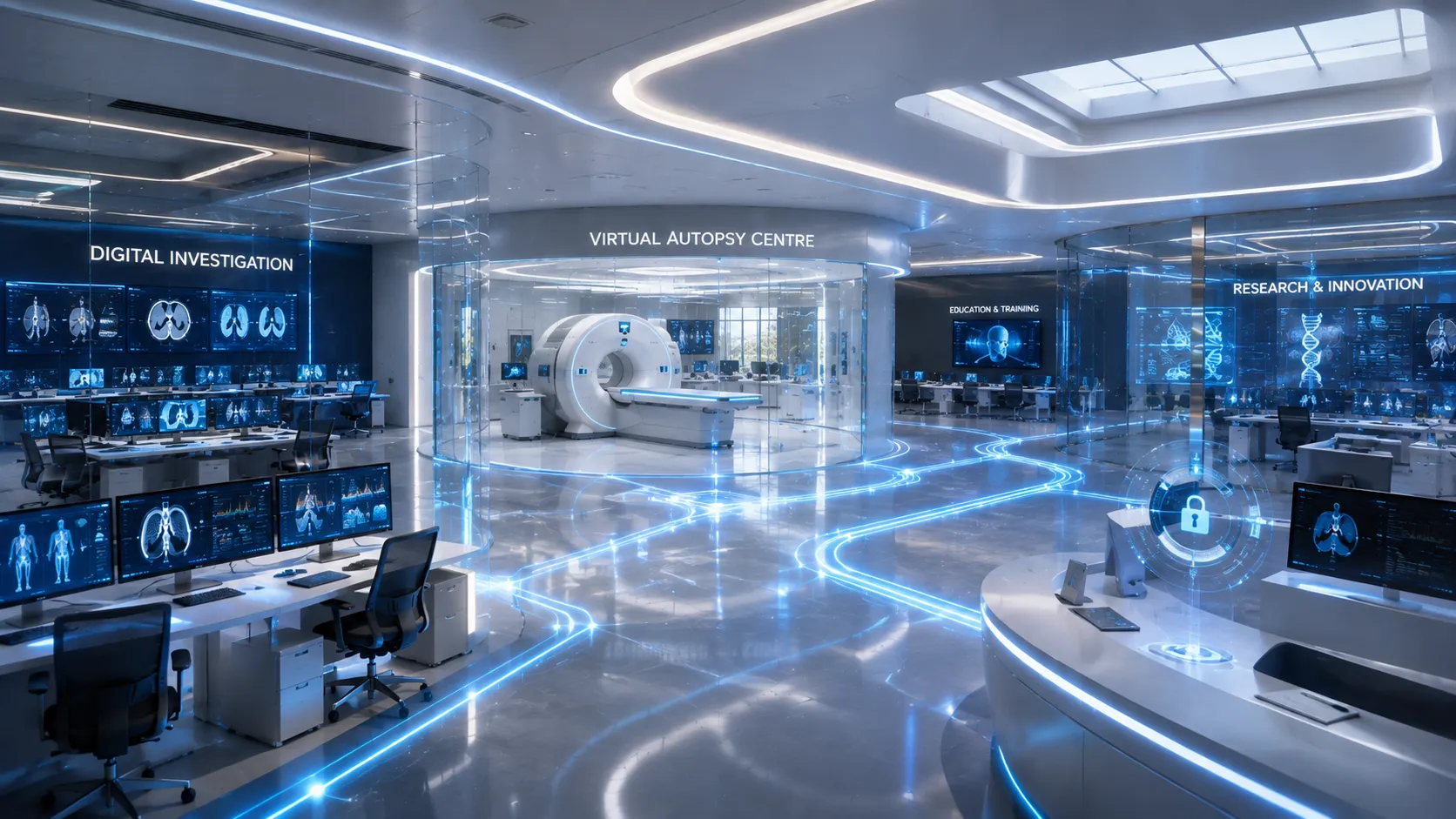
As forensic institutions modernise, it is tempting to think about imaging, reporting, storage, education and investigation as separate technology decisions. In practice, they often depend on the same underlying evidence. A scan created for an examination today may support a second opinion tomorrow, an investigation months later and, where appropriate, teaching or research in the future.
This thinking shapes SEVA Technologies' approach to forensic infrastructure. We see virtual autopsy and forensic imaging as part of a broader ecosystem in which imaging, digital workflows, evidence management and education need to connect. The objective is larger than digitising an existing process. It is to help create forensic systems in which evidence remains traceable, accessible and useful throughout its lifecycle.
The Evidence We Preserve Today May Answer Tomorrow's Questions
As forensic science becomes increasingly digital, the quality of an investigation will depend not only on what can be captured, but also on how confidently that evidence can be preserved, revisited and explained. The journey of digital evidence in forensic investigation therefore begins long before the courtroom.
If your institution is exploring how imaging, evidence preservation and digital workflows can work as one connected forensic ecosystem, talk to SEVA Technologies.
Exploring how digital evidence management could fit into your institution's forensic infrastructure?
Talk to SEVA Technologies about building an integrated, future-ready forensic ecosystem.
FAQs
Digital evidence in forensic investigation includes information captured, created or stored electronically that may support an investigation or legal proceeding. In forensic medicine, this can include digital photographs, CT or MRI images, 3D reconstructions, reports and associated case records. Its usefulness depends not simply on capturing the information, but also on preserving its integrity, context and accessibility.
Preservation helps ensure that evidence remains available and reliable throughout an investigation and any subsequent legal proceedings. Digital records require particular attention because files may be altered, copied, corrupted or separated from contextual information. Effective forensic evidence preservation therefore considers the original data alongside identification, access controls, storage, documentation and the history of how the evidence has been handled.
Chain of custody records what happens to evidence from the point at which it is collected or created. For digital evidence, this may include acquisition, storage, access, transfer, copying and examination. Maintaining this history helps establish that evidence reviewed later can be reliably connected with the original record and that its handling can be accounted for.
Forensic imaging evidence helps experts examine internal structures, document injuries, and preserve visual information for later review. Depending on the case and imaging modality, it may also support specialist consultation, comparison with other investigative evidence and clearer presentation of findings during legal proceedings. Imaging is most valuable when interpreted alongside other forensic and investigative information.
Potentially, yes. One advantage of appropriately preserved forensic imaging is that the original dataset may remain available for later examination. This can be useful if a new investigative question emerges or another expert opinion is required. The value of later review depends on how well the original data was captured, identified, preserved and governed.
Forensic imaging may form part of evidence considered during legal proceedings, subject to applicable laws, rules of evidence and procedure. Imaging can also help forensic experts explain relevant findings visually. Its evidentiary value depends on factors including relevance, integrity, documentation and expert interpretation rather than the sophistication of the imaging technology alone.