Disaster victim identification is one of the most demanding situations a forensic system can face. An earthquake, major accident, fire, flood or other mass-fatality event can suddenly bring hundreds of individual investigations into the same operational environment. Identification must be accurate, evidence must remain traceable, agencies must coordinate, and families are waiting for answers. Technology cannot remove that pressure. It can, however, give forensic teams better ways to document, examine, preserve and revisit information. This is where virtual autopsy in mass disasters deserves a closer look.
FORENSIC CT•11 AUG 2026•2 MIN READ
Mass Disasters Demand Better Technology: The Role of Virtual Autopsy in Disaster Victim Identification
Summary
Disaster victim identification becomes significantly more complex when fatalities occur at scale. Virtual autopsy and forensic imaging can support identification, documentation and evidence preservation while helping forensic teams build more coordinated, reviewable and dignified workflows.
Why Does Disaster Victim Identification Need a Different Kind of Preparedness?
What Changes When One Investigation Becomes Hundreds?
In routine forensic practice, cases generally move through established processes one at a time. A mass disaster changes both the volume and the pace. The challenge is not simply examining more deceased individuals. Information is also coming from several directions. Scene records, photographs, fingerprints, dental information, DNA, medical histories, radiological records and personal belongings may all become relevant to identification.
INTERPOL defines Disaster Victim Identification as the process of establishing the identity of people who have died as a result of a disaster. Its internationally recognised DVI process brings together scene examination, post-mortem information, ante-mortem information and reconciliation. Visual recognition alone is generally insufficient for conclusive identification. That makes information management central to DVI. A finding is useful only when forensic teams know where it came from, who it belongs to and how it connects with the rest of the case.
In our work around forensic technology, this is an area we believe deserves more attention. Disaster readiness is often discussed in terms of response capacity. Information capacity matters just as much.
Where Can Virtual Autopsy Fit into Disaster Victim Identification?
Forensic imaging in disasters can add another layer of information before, or where appropriate alongside, further examination. Post-mortem CT can create a detailed digital record of the body and reveal skeletal injuries, foreign objects, implants and other internal findings. Depending on the circumstances, those findings may assist identification, guide further examination or be compared with medical information collected during the ante-mortem phase. Real-world evidence supports this. Following the 2009 Victorian bushfires in Australia, research published in Forensic Science International documented how CT scanning was incorporated into the DVI process. Researchers scanned the contents of 255 body bags. Of the 164 people reported missing, 163 deceased individuals were ultimately identified, with CT contributing to the identification of 161. CT also helped forensic teams identify medical devices and anatomical features, separate human from non-human material and recognise commingled remains.
That experience points to an important distinction. The value of virtual autopsy in mass disasters is not limited to finding a cause of death. Imaging can become part of the identification and documentation process itself.
Why Does a Digital Forensic Record Matter After the Scan Is Over?
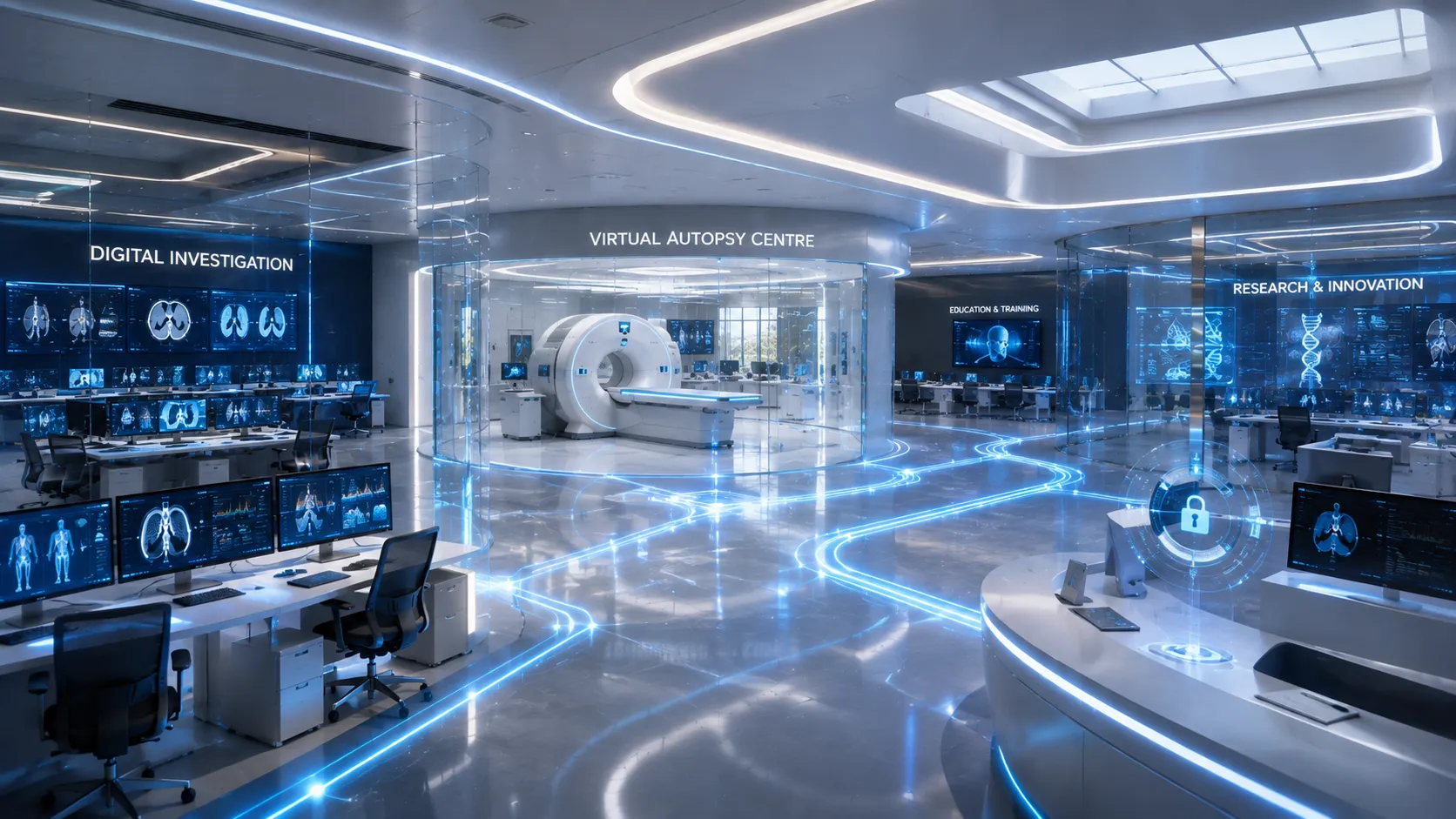
A physical examination happens at a particular point in time. A properly preserved imaging dataset can be revisited. This has practical implications during a large investigation. An imaging record may be reviewed by another specialist, compared with ante-mortem medical images received later or examined again when new information emerges.
Consider a simple scenario. A team receives a post-mortem CT scan on the first day of an investigation. Several days later, the family provides an older radiograph showing an orthopaedic implant. The original CT dataset can now be reviewed against that information without recreating the examination. That ability to return to evidence changes its usefulness.
It also means institutions considering forensic imaging in disasters need to think beyond the scanner. The surrounding system matters:
- How is each imaging dataset linked to the correct case?
- Where will the information be securely stored?
- Who can access or share it?
- Can antemortem and postmortem information be compared efficiently?
- Will the record remain retrievable if a case needs to be reviewed months or years later?
These may sound like administrative questions. During a mass-fatality event, they become forensic questions too.
Can Technology Help Preserve Dignity as Well as Evidence?
Another dimension of disaster victim identification that should never take a back seat to efficiency is dignity. The International Committee of the Red Cross describes proper and dignified management of the dead as a fundamental part of facilitating identification and helping families discover the fate of loved ones. Its guidance stresses careful recovery, documentation, unique identification and traceability. Virtual autopsy can contribute to that broader philosophy.
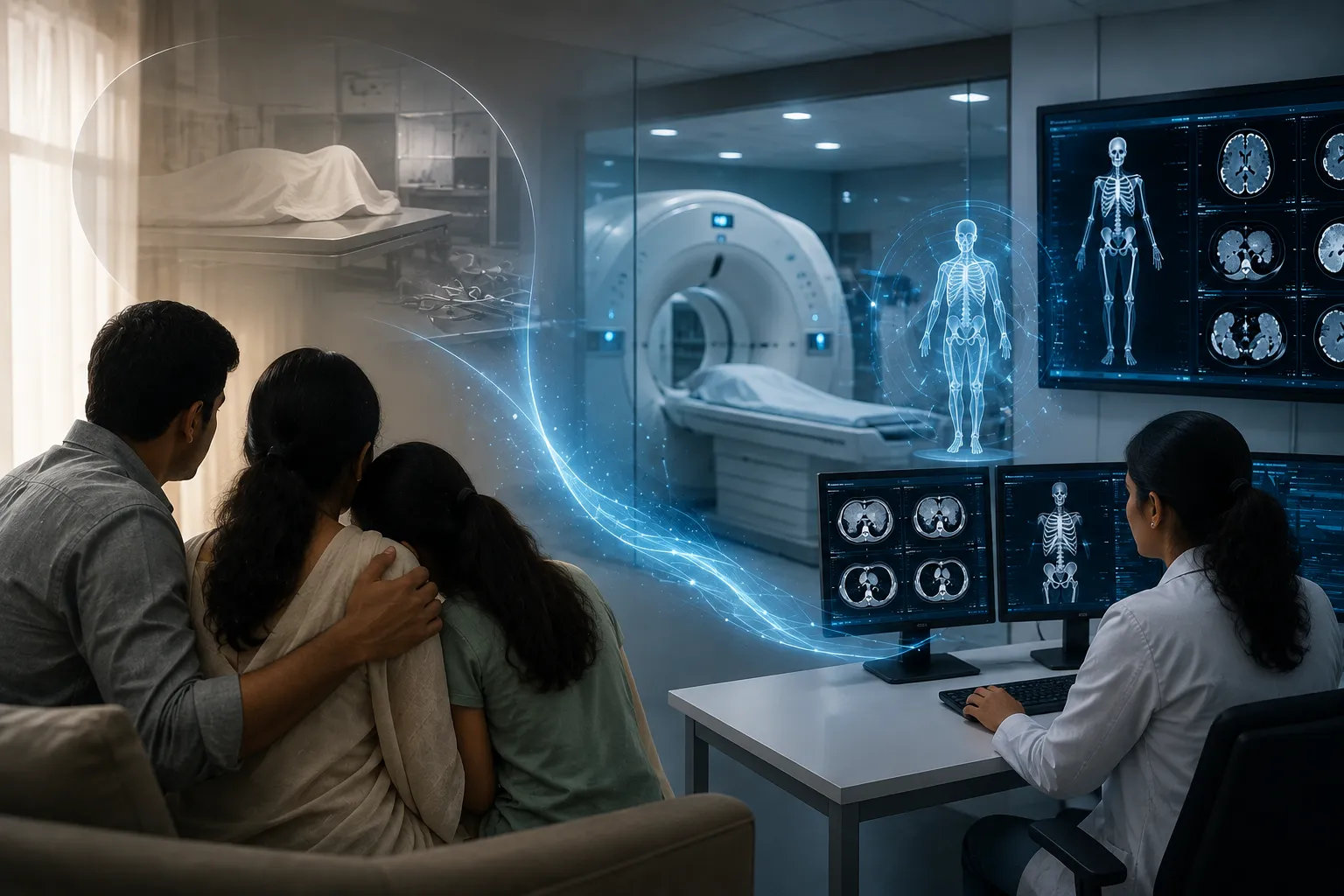
Where appropriate, imaging allows non-invasive information collection before further procedures are considered. It creates a visual record that can support expert review and may help forensic teams plan subsequent examinations more precisely. This does not make conventional forensic methods less important. Rather, it gives specialists another source of evidence and another way of approaching a case. For India, where religious, cultural and family considerations around the deceased can be significant, that deserves thoughtful consideration alongside the scientific benefits.
Preparedness Is Bigger Than Buying a Scanner
One observation has become increasingly clear: forensic technology creates its greatest value when the surrounding ecosystem is ready for it. A CT scanner without trained professionals, imaging protocols, secure data management or integration with forensic workflows has obvious limitations. The same applies to sophisticated digital evidence systems if teams have not been trained to use them under real operational pressure. For institutions focused on disaster preparedness, we believe four capabilities must develop together: technology, people, processes, and evidence continuity.
That means imaging capacity should connect with forensic expertise. Training should reflect real workflows. Digital records should remain traceable. And systems designed for everyday forensic work should have a clear path to scale when an extraordinary event occurs.
This is also how SEVA Technologies approaches Virtual Autopsy. We see it as part of a larger forensic ecosystem that brings imaging, digital workflows, education and research closer together. The intention is to strengthen the environment in which forensic experts work and create infrastructure that remains useful well beyond an individual case or technology.
Planning future forensic or disaster-response capabilities? Explore SEVA's Virtual Autopsy ecosystem or speak with our team about building an integrated approach to imaging, evidence and education.
The Best Time to Strengthen DVI Capability Is Before It Is Needed
Mass disasters will always place forensic systems under extraordinary pressure. Better preparation can determine how effectively that pressure is managed. The future of disaster victim identification will increasingly involve forensic imaging, dependable digital records, trained specialists, and coordinated workflows. Building enterprise readiness around virtual autopsy in mass disasters today can help institutions respond with greater precision, confidence and dignity when circumstances demand it.
Planning future forensic or disaster-response capabilities?
Explore SEVA's Virtual Autopsy ecosystem or speak with our team about building an integrated approach to imaging, evidence and education.
FAQs
Disaster victim identification, or DVI, is the structured process used to establish the identities of people who have died in a mass-casualty incident. International DVI protocols bring together post-mortem findings with ante-mortem information. Depending on the circumstances, identification may involve fingerprints, dental records, DNA, medical information, radiological findings and other scientifically reliable evidence.
Virtual autopsy can use post-mortem CT and other imaging techniques to create detailed digital records before or alongside further forensic examination. In a mass disaster, these images may help document internal findings, identify medical implants or anatomical characteristics, support case triage and provide information that can later be compared with ante-mortem records.
Forensic imaging in disasters may reveal fractures, implants, previous surgical interventions, foreign objects and distinctive anatomical characteristics. Some findings can potentially be compared with ante-mortem radiographs or CT scans. Imaging also creates a permanent digital dataset that authorised forensic specialists can revisit as new information becomes available during the identification process.
Virtual autopsy does not have to be viewed as a replacement for conventional autopsy. The two can play complementary roles. Imaging may provide useful information before further examination, help specialists plan subsequent procedures and create a permanent visual record. The appropriate method will depend on the case, available evidence, legal requirements and professional forensic judgement.
Mass-disaster investigations generate large volumes of information from different teams and sources. Digital records can make forensic findings easier to preserve, retrieve, compare and review when supported by appropriate governance and case management. Clear links between each record and the correct individual are particularly important because traceability and evidence continuity are fundamental to reliable identification.
Virtual autopsy can support a more considered approach because imaging can collect valuable information non-invasively before further procedures. This may be particularly relevant where cultural, religious or family considerations are important. However, dignity depends on the entire process, including respectful recovery, documentation, identification, communication and handling of the deceased.
Preparation should go beyond acquiring forensic technology. Institutions can consider imaging capacity, trained forensic and radiology professionals, standardised protocols, secure data storage, case traceability and multidisciplinary training. Medical colleges can also strengthen preparedness through education and research so that future professionals understand how imaging fits within the wider disaster victim identification process.